
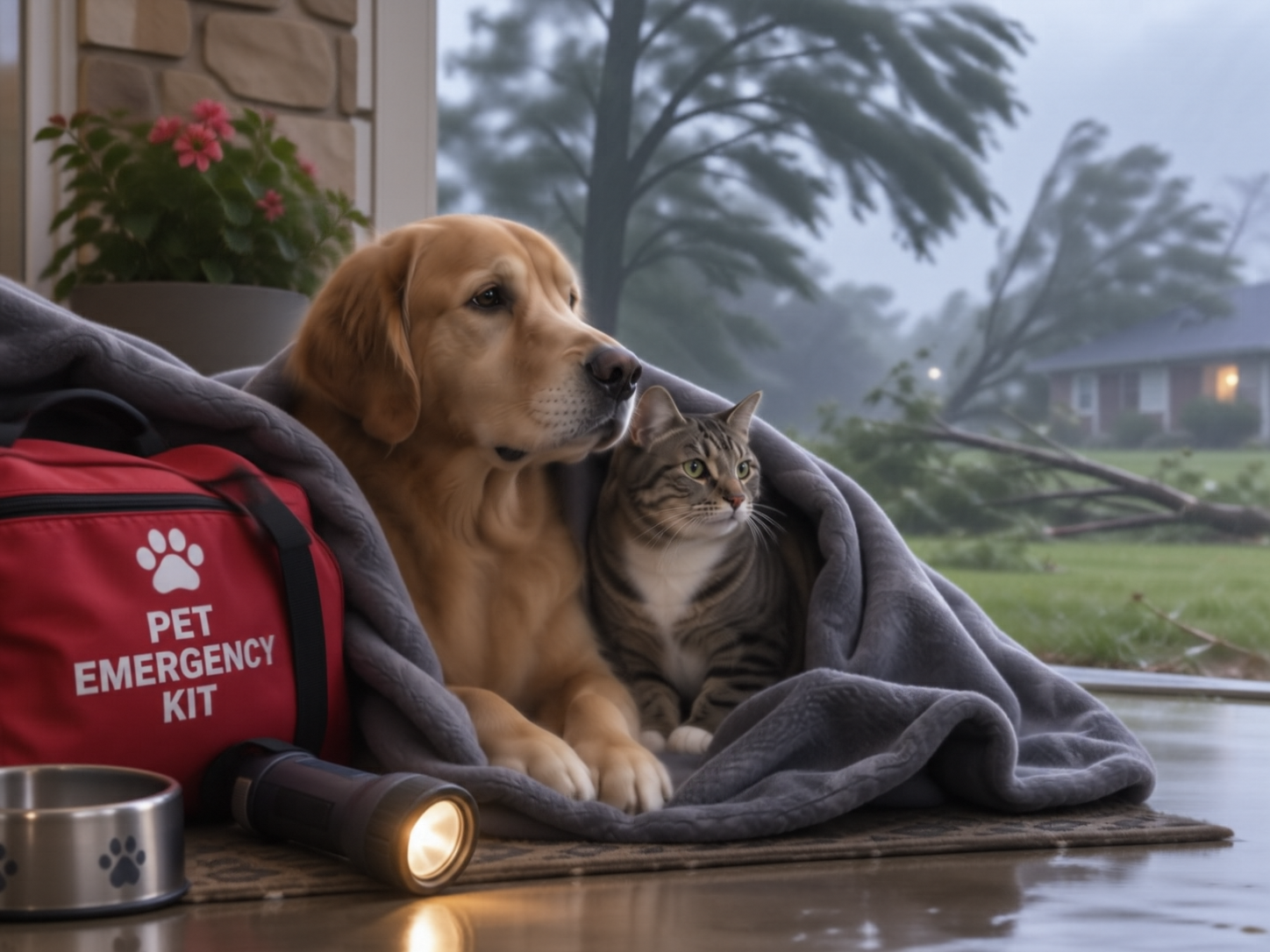
Learn how to prepare your dog or cat for storms, power outages and evacuations with a practical pet disaster preparedness plan.
If you’ve been watching the news lately, you’ve probably seen a lot of discussion about emergency preparedness, power outages, infrastructure disruptions and even rumors of a prolonged nationwide blackout. While there is no evidence that a 90-day nationwide blackout is planned, recent headlines are a good reminder of something we don’t always think about until an emergency happens: Are our pets prepared?
Here in Ooltewah, Collegedale and the surrounding Chattanooga area, we can experience plenty of more ordinary emergencies, too—severe storms, tornadoes, flooding, winter weather, extended power outages, house fires and evacuation orders.
Your emergency plan should include every member of your family, including the four-legged ones.
Start With a Pet Emergency Kit
You don’t need to build a doomsday bunker for your dog or cat. A basic emergency kit can make a huge difference if you suddenly need to leave home or can’t get to the store.
Keep these supplies together in a waterproof container or bag:
– Several days of your pet’s regular food
– Several days of drinking water
– Food and water bowls
– Any medications your pet takes regularly
– A leash and collar or harness for dogs
– A secure carrier for cats and other small pets
– Waste bags and paper towels
– Cat litter and a small litter box if you have a cat
– A familiar blanket or small comfort item
– Basic first-aid supplies
– A recent photo of your pet
– Your veterinarian’s contact information
– Copies of vaccination and medical records
Ready.gov recommends keeping several days of food and water available and including medications, identification and important records in your pet’s emergency supplies.
One important tip: Don’t put the food in the emergency kit and forget about it. Rotate it periodically so you aren’t discovering expired food when you actually need it.
Make Sure Your Pet Can Be Identified
An emergency is exactly the wrong time to discover that your pet’s identification information is outdated.
Make sure your pet has:
A properly fitted collar and identification tag.
A registered microchip. A microchip is especially important because collars and tags can be lost during an escape.
Current contact information. If you’ve moved or changed phone numbers, update your pet’s microchip information.
It’s also a good idea to keep a current photo of your pet on your phone. If your pet becomes lost, having a recent photograph can make creating a lost-pet post much easier.
Know Where You Will Go
This is one of the most important parts of disaster planning.
Don’t assume that every emergency shelter, hotel or temporary housing facility will accept pets. Before an emergency occurs, identify a few options where your pets can stay if you need to evacuate.
Consider:
– Friends or family members outside the affected area
– Pet-friendly hotels
– Boarding facilities
– Veterinary facilities that may be able to provide temporary assistance
– Local animal shelters or emergency animal-care organizations
Have more than one option whenever possible. During a major disaster, your first choice may not be available.
Have a Plan If You’re Not Home
What happens if a tornado, fire or other emergency occurs while you’re at work and your pets are home alone?
Think about who could check on them if you can’t get home.
A trusted neighbor, friend or family member may be able to serve as your emergency pet caregiver. Make sure that person knows where your pets are, where their carriers and supplies are located, and how to access your home if appropriate.
You can also leave emergency information somewhere visible to first responders, such as a note indicating that pets are inside and how many animals are normally in the home.
Keep Medications and Medical Information Ready
If your pet takes daily medication, an emergency is not the time to discover that you only have two doses left.
Try to keep a reasonable backup supply of essential medications and make sure you know the medication name, dose and frequency.
Keep copies of important medical information, including:
– Current medications
– Significant medical conditions
– Vaccination records
– Your veterinarian’s contact information
– Any specialist information that might be important during an emergency
This can be especially important for pets with chronic diseases, seizure disorders, diabetes, heart disease or other conditions requiring regular treatment.
Don’t Forget About Power Outages
A power outage may not sound like a major disaster, but it can become a problem for pets surprisingly quickly.
Consider what your individual pets need if the electricity is unavailable for an extended period.
For example:
– Does your pet require refrigerated medication?
– Does a medical device require electricity?
– Does your home become dangerously hot or cold without HVAC?
– Do you have a well that requires electricity to provide water?
– Does your pet’s normal food require refrigeration?
– Do you have adequate lighting to safely care for your animals?
Thinking through these questions ahead of time can help you identify problems before an emergency occurs.
Practice Before You Need to Evacuate
A disaster is not the ideal time to discover that your cat has never seen its carrier or that your dog refuses to get into the car.
For dogs, periodically practice loading into the vehicle and walking with a leash or harness.
For cats, leave the carrier somewhere accessible rather than bringing it out only for veterinary visits. You can occasionally put treats or familiar bedding inside so the carrier becomes less frightening.
If your pet is extremely fearful or difficult to handle during emergencies, talk with your veterinarian ahead of time about strategies that may make evacuation safer.
Don’t Panic—Just Prepare
You don’t need to spend hundreds of dollars buying emergency supplies because of something you saw on social media.
Instead, use the current headlines as a reminder to spend an hour making a practical plan.
Emergencies are unpredictable. Being prepared doesn’t mean you expect something terrible to happen. It simply means you’ll have fewer decisions to make if something does.
At Applebrook Animal Hospital, we want our patients to be healthy and safe—not just during their routine visits, but when the unexpected happens, too.
Take a few minutes this week to make sure your pets are part of your family’s emergency plan.